Hard Water Guide
Discover how to prevent and remove hard water damage in Scottsdale homes. Learn the best products and practices for protecting surfaces from mineral buildup.
Hard Water Damage in Arizona: The Definitive Scottsdale and Paradise Valley Homeowner's Guide
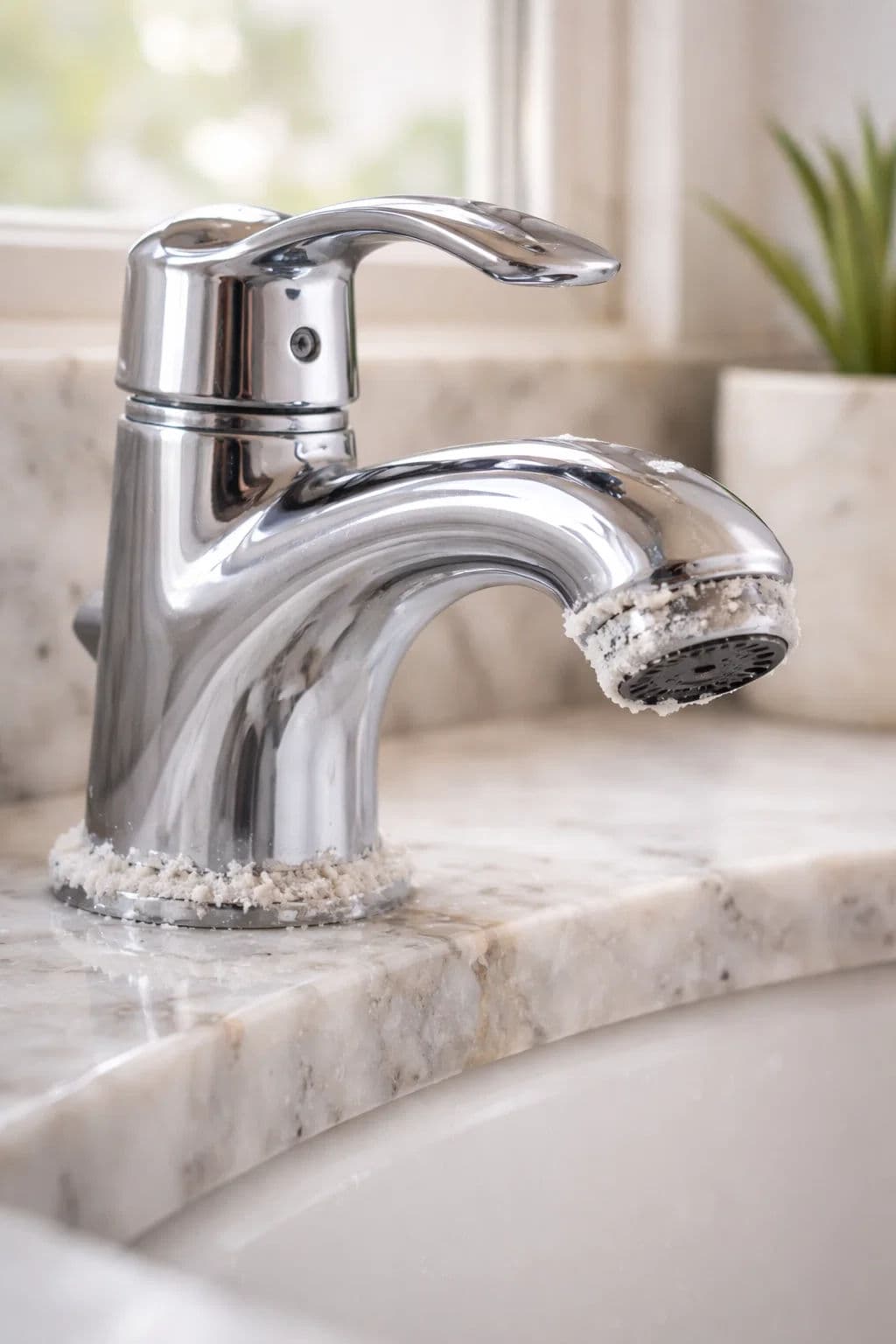
That white film creeping across your Scottsdale kitchen faucet isn't soap scum — it's calcium carbonate from Arizona's notoriously hard water, and if you're scrubbing it with the wrong product, you're etching your fixtures instead of cleaning them. Here's exactly how to remove it, prevent it, and protect every surface in your home from the mineral buildup that costs Phoenix homeowners thousands in premature replacements.
Arizona has some of the hardest water in the United States. If you live in Scottsdale, Paradise Valley, Chandler, or Gilbert, your water likely exceeds 200 parts per million on the hardness scale — that's roughly four times harder than the national average. Hard water isn't dangerous to drink, but it's devastatingly aggressive against the surfaces you care about: marble countertops, travertine tile, stainless steel appliances, shower glass, and anything with a polished finish.
This guide cuts through the confusion about hard water damage. You'll understand exactly what's happening, why prevention matters more than fixing it after the fact, and which cleaning techniques actually work without causing more damage.
What Arizona Hard Water Actually Does to Your Home
Most Phoenix homeowners think hard water means "my faucets get spotty." That's the visible symptom. The real damage is far more expensive.
Hard water mineral deposits accumulate in layers. Each time you use hot water, calcium and magnesium ions separate from the water and bond to surfaces. Over weeks and months, these deposits build up — first as a barely visible film, then as noticeable white or tan crusty buildup. In Arizona's 300+ sunny days per year, the mineral deposits actually crystalize faster than they would in humid climates.
This layering causes three distinct problems:
Surface Etching
On natural stone (marble, travertine, limestone), hard water minerals don't just sit on top — they chemically bond to the stone's surface. The calcium dissolves microscopic portions of the stone, leaving permanent dull spots even after cleaning. Once etching occurs, it cannot be reversed without professional grinding and resealing. A Scottsdale homeowner with marble countertops can spend $2,000-$5,000 repairing etch damage that took months to accumulate.
Fixture Degradation
Faucet aerators (the screens at the tip) collect mineral deposits that restrict water flow. Showerheads lose pressure. Dishwashers develop clogged spray arms. The minerals don't permanently damage the hardware, but they degrade performance and eventually corrode the metal underneath when deposits build thick enough. Replacing a shower valve that worked fine five years ago but failed due to mineral corrosion costs $800-$1,200 in labor and parts.
Finish Dulling
Polished chrome, brushed nickel, stainless steel, and glass all lose their luster under hard water assault. What starts as spots becomes a hazy film that makes high-end fixtures look cheap and worn. No amount of aggressive scrubbing removes this once it sets — you either re-polish the fixture (expensive) or replace it.
How Hard Water Interacts with Arizona's Desert Climate
Hard water alone is a problem. Hard water plus Arizona's dry climate creates a perfect storm.
In humid climates, water takes time to evaporate, giving you a window to wipe surfaces dry and prevent mineral buildup. Phoenix's relative humidity averages 30%, and in summer it drops to 15%. Water evaporates so fast that mineral deposits crystallize almost immediately.
This means you cannot rely on letting water dry naturally to prevent spotting on glass or tile. Mineral deposits harden faster, making them harder to remove once they set. The desert wind carries dust that mixes with hard water residue, creating a stubborn paste that ordinary cleaners won't touch. Stone surfaces dry so quickly that mineral deposits literally bake into the surface.
Luxury Paradise Valley homeowners often describe this as "the harder I clean, the worse it looks." They're actually seeing mineral deposits that have crystallized into the surface, not surface dirt. Aggressive scrubbing with hard brushes causes micro-scratches that trap more minerals.
Understanding Arizona Water Hardness by Neighborhood
Not all Phoenix-area water is equally hard. Your specific neighborhood determines your cleaning strategy.
Highest Hardness (200+ PPM): Scottsdale (85254, 85255, 85260, 85262), Paradise Valley (85253), North Phoenix/Arcadia, South Chandler (85225, 85226). If you live in these areas, assume every surface is under constant mineral attack.
Moderate-High Hardness (150-200 PPM): Gilbert (85295, 85296, 85297), Ahwatukee (85044, 85045), Central Chandler (85224, 85248).
Moderate Hardness (100-150 PPM): Tempe, Mesa (East Valley areas drawing from different water sources).
The mineral composition also varies. Northern Scottsdale water contains more calcium, creating white deposits. Some areas see more magnesium, which appears as tan or brownish film.
The Right Way to Remove Hard Water Deposits (Without Damaging Surfaces)
Most homeowners use CLR or other commercial hard water removers. These work — but they're also acid-based and can etch stone, dull finishes, and damage grout if left on too long.
Here's the professional approach, tiered by surface type:
For Glass and Chrome (Non-Stone):
Start with the least aggressive method: white vinegar and distilled water (50/50 mix). Spray generously and let it sit for 10-15 minutes. The acidity dissolves mineral deposits without damaging chrome or glass. Wipe with a microfiber cloth — crucial, because paper towels and rough cloths create micro-scratches that trap future minerals.
If vinegar doesn't fully remove stubborn buildup (usually after months of accumulation), move to commercial hard water remover following label instructions exactly. Use a timer — even 5 minutes extra on stone can cause etching. Never use a scouring pad; use a soft cloth or sponge.
For shower glass specifically: Squeegee after every use. This single habit prevents 90% of hard water spotting. It takes 15 seconds and costs nothing.
For Marble, Travertine, and Natural Stone:
Stone requires pH-neutral cleaners only. Avoid vinegar, CLR, and all acids. Use a cleaner specifically labeled "safe for natural stone" (pH between 7-8). Brands like Neutral Tile Cleaner or Stone and Tile care products are formulated to clean without etching.
For removal of existing deposits: Use a soft cloth with the pH-neutral cleaner and gentle pressure. If deposits don't yield, call a professional. Attempting to scrub away stubborn mineral buildup yourself risks permanent etching damage that costs thousands to repair.
For Stainless Steel Appliances:
Hard water spots on stainless steel are usually mineral deposits, not rust. Use a microfiber cloth dampened with vinegar solution, wiping along the grain of the metal. Finish with a dry cloth to prevent new water spots. If spots persist, use a specialized stainless steel cleaner (these contain oils that fill micro-scratches and prevent future spotting).
Never use abrasive pads on stainless steel — you'll create directional scratches that look worse than the mineral deposits.
For Faucet Aerators and Shower heads:
Unscrew the aerator from the faucet tip or remove the showerhead completely. Soak both in a 50/50 vinegar-water solution for 4-6 hours. Use an old toothbrush to gently scrub away loosened deposits. Soak again if needed. This prevents damage that would require calling a plumber to replace the entire valve.
Prevention: Your Real Defense Against Hard Water Damage
Cleaning removes deposits after they form. Prevention stops them from forming in the first place.
Install Water Softening Technology
True hard water solution is a whole-house water softener. These systems chemically transform calcium and magnesium ions before they reach your fixtures and surfaces. Arizona homeowners report that softened water noticeably improves soap effectiveness, appliance longevity (water heaters last 8-10 years instead of 4-5), fixture performance (shower heads maintain pressure), and cleaning speed (you remove deposits less often).
Cost is $1,500-$3,500 installed, with annual maintenance of $100-$200. Compared to $5,000 marble repair, $1,200 valve replacement, and countless hours cleaning — it pays for itself in less than two years.
Daily Prevention Habits
Squeegee glass shower doors and walls after every use. Wipe down stainless steel appliances immediately after use. Use distilled water on natural stone surfaces when possible. Run bathroom exhaust fans during and 30 minutes after showers to reduce humidity and mineral evaporation indoors. Unscrew and rinse aerator screens on faucets monthly to prevent buildup before it restricts flow.
Frequency-Based Maintenance
Even with prevention habits, Arizona homes need scheduled hard water maintenance. Weekly: squeegee shower glass, wipe fixtures. Monthly: deep clean bathroom tiles and grout, soak faucet aerators. Quarterly: deep clean kitchen surfaces, polish stainless steel. Annually: professional deep clean of high-impact surfaces (master bath, kitchen), re-seal stone surfaces.
This is where the investment in professional cleaning services pays off. The difference between a one-time improvement and lasting results comes down to systems. Frequency matters — but the right frequency depends on your home's specific conditions and water hardness in your specific Phoenix zip code. This is why our team assesses hard water impact during the first visit using a standardized evaluation that accounts for your neighborhood's water hardness, surface types, and current deposit accumulation.
Hard Water's Hidden Cost: Impact on Home Value
Phoenix luxury real estate appraisers notice hard water damage immediately. Spotted glass, dull fixtures, etched marble, and mineral-crusted grout signal poor home maintenance to potential buyers.
Here's what potential buyers see: "If they let hard water destroy surfaces, what else was neglected?" Repairs needed include repolishing marble, replacing fixtures, and regrouting tile. Estimated repair costs run $3,000-$8,000 for a single bathroom. Buyers use visible hard water damage to reduce offers.
Homes with pristine surfaces protected from hard water damage appraise 5-10% higher in Scottsdale's $800K+ market. That's $40,000-$80,000 on a $1M home. Preventing hard water damage isn't just about keeping your home clean — it's about preserving your asset.
When to Call a Professional vs. DIY Cleaning
Do-it-yourself works for weekly maintenance (squeegeing, light wiping), minor spotting on glass or chrome (vinegar solution works well), routine faucet aerator soaking, and basic bathroom tile cleaning with pH-neutral products.
Call a professional when mineral deposits have built up for months without proper maintenance, natural stone shows visible spots or dull patches (risk of permanent etching is too high), hard water has restricted water flow in shower heads or faucet aerators, you need specialty surface care (marble polishing, travertine sealing, specialty finishes), or you want a customized hard water prevention plan for your specific neighborhood and home.
Scottsdale and Paradise Valley homeowners with high-value finishes often find that monthly or quarterly professional deep cleaning is cheaper than replacing etched marble or corroded fixtures.
Your Hard Water Action Plan
Start this week:
1. Identify your water hardness level. Call your local water district or check their website for your neighborhood's PPM. Paradise Valley and North Scottsdale typically exceed 200 PPM.
2. Audit your high-impact surfaces. Which areas show the most hard water damage? Master bathroom? Kitchen? These are your priority zones for prevention.
3. Establish a squeegee habit. If you have glass shower doors, this single daily action prevents the majority of hard water spotting.
4. Stock your cleaning arsenal. Buy distilled water, white vinegar, microfiber cloths, and pH-neutral stone cleaner. These four items handle 90% of hard water challenges.
5. Set a maintenance frequency. Based on your water hardness and surface types, decide whether weekly, bi-weekly, or monthly deep cleaning is needed. Mark it on your calendar.
6. Consider water softening. If you're constantly fighting mineral deposits, or if you have marble and travertine surfaces, a water softener investment pays dividends.
Our team genuinely enjoys solving hard water challenges — it's one of the reasons we attract cleaning professionals who care about the craft and understand that different homes require different expertise. We've cleaned thousands of Phoenix bathrooms, and we know exactly which techniques protect marble, which approaches keep travertine looking new, and how to maintain the premium finishes that matter in Scottsdale homes.
Interested in joining a team that solves problems like this? GPC is always looking for cleaning professionals who understand that hard water requires expertise. See our current openings.